GAME REVIEW: Clair Obscur - Expedition 33
Easily one of the best games I’ve ever played!
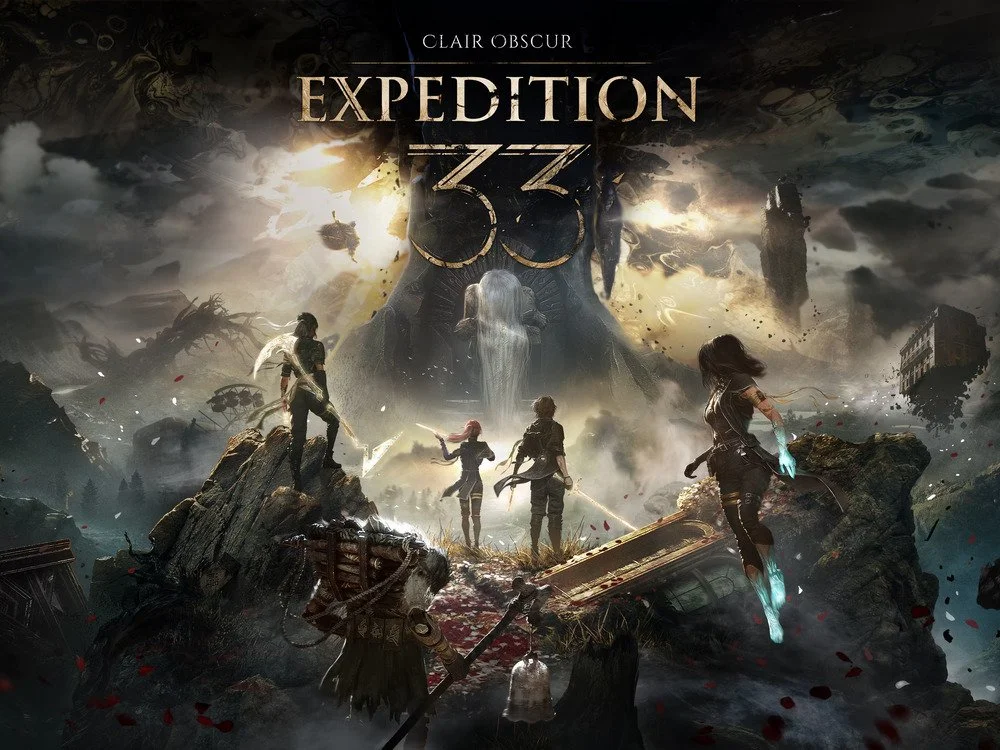
So, I know I’m trying to ease off the whole reviewing everything I experience thing, but every so often, you come across something that’s just so nonsensically good that you feel a deep and abiding need to talk about it. Today, that game is Clair Obscur: Expedition 33. Released in 2025 by Sandfall Interactive, it has received pretty much universal acclaim and won all the awards last year, and for damned good reasons. So, let’s cut to the chase as to why that is, shall we?
Note: I will spoil who four of the PCs are in the Characters section, so keep that in mind if you’re really sensitive to spoilers. Otherwise, everything major will be in the Spoiler Zone near the end.
Music
First and foremost, this soundtrack is fantastic. Lorien Testard was, as I understand, pretty unknown before this game but he’s impressed nearly everyone I know with the delightful score. The use of motifs, the fun French bits, all of it just works, enhancing the rest of the experience. I don’t even mind the moments with vocals—in Ender Magnolia, I found any singing in the score to be a bit distracting, but in this game, it always seemed fitting.
Now, it’s worth saying that I said “nearly” for a reason. I had a friend over some time ago and had the album playing, and she was sort of fascinated by the song she was hearing (alas, I forget which one). She’s a professional musician and has a fair bit of musical training, and she was murmuring that one of the songs was “composed wrong,” insofar as something artistic can be ‘wrong,’ and that it was okay, but it had bothered her, but she was grinning rather delightedly. I should really ask what she meant, because I personally don’t really know much of anything about music composition.
I will just say though, when you set in for the last push in the game and the music kicks off, with everything going around… chills. Chills all over me. The music really ties everything in this game together. I’m getting chills again just thinking about it now. It rules.
Art
This game also doubles as one of the most stunning 3D action RPG games I’ve ever seen, period. It’s not just beautifully modern and looks gorgeous on the latest PS5 tech, but the psychedelic fantasy themes are immersive AF and every area just offers more and more. Did I mention that the game’s world is relatively massive, all things considered? You can quite literally get lost in it, and if you weren’t in such a hurry to figure out what’s going on, you’d probably enjoy the process.
I will say that it can be frustrating—particularly in the first playthrough—to be so desperate to see everything, while the part of you that’s engaged in the story is equally desperate to move things forward. You want to get into every nook and cranny so you don’t miss anything (because you will miss a lot of hidden paths and secrets and items), but you also need to know what’s going on, so you have to keep pushing forward.
That said, nearly every new area I entered made me pause so I could look around and just take in the world. I wanted to be there IRL. If the game had been made in virtual reality, I’d buy a VR set just so I could feel like I’m there.
Full score for art and cool fantasy imagery!
Characters
Thinking about games like the Final Fantasy series, it’s often the characters that really make them shine. For many, it’s how cool and mysterious Sephiroth and Cloud were in Final Fantasy VII. Personally, my all-time favorite game is Final Fantasy IX specifically because of the incredible characters and their emotional arcs.
The characters in this game are incredible because they feel complete. They have pasts and feelings towards their pasts that affect the way they move forward. Gustave is dedicated to making the world a better place, wanting future generations to live free. Maelle doesn’t feel like she belongs in Lumiére and wants to escape to the continent to find herself. Lune came from strict, dedicated parents, who weren’t very emotionally available and had high expectations for her. Sciel… let’s just say she has a traumatic past. All of these things are apparent up-front, but the depth of who they are and why they are that way gets intense the more you engage with the characters. And those are just the characters you know about early on.
The side characters, too, help make the world feel real, especially in the way they speak without any exposition. Or, rather, the exposition is masterfully worked into natural-sounding dialogue, which is something I try to do in my own writing. I don’t want to spoil any NPC names, but let’s just say that a lot of them are just as delightful and wonderfully whimsical as the characters you get to play as.
Gameplay
Now, this game isn’t actually flawless, but it’s damned near close.
First of all, they took classic JRPG turn-based tactics, simplified them nicely, and made them innovative and fun, in part by implementing parry mechanics inspired by games like Sekiro. And it was brilliant—for players like myself who aren’t great at tactics or parrying, it’s still fun and engaging, with lots of options for how to spend combat turns. Players who like a good Soulsborne challenge can amp up the difficulty a bit and go full ham with lots of builds. You have arguably way too many weapons to choose from, plenty of moves to choose to suit your style, and lots to tinker with to customize your movesets and gameplay, specifically in the pictos. There are a bunch of different outfit and hairdo skins too, if you’re a die-hard collector.
Admittedly, the menu is a little unclear, so I’m not the only one who took a while to figure out how to implement the lumina points and pictos, but once I did figure it out, I felt like the gameplay was actually somewhat similar to the way you learn moves from your equipment like in FFIX, which also happened to be my favorite game system in the series.
There are a lot of little things as well that I appreciate. The ability to adjust the game difficulty is an easy one, but the fact that when you enter an area from the world map, the entrance ‘portal’ will change color based on the expected difficulty level, with red being the hardest, was such a great little detail. Simple, unnecessary, but really honestly nice to have as a small time-saver. And, the spacing between expedition flags (AKA save/heal points) was essentially flawless throughout the game—I don’t recall a single incident where I didn’t feel like I had enough items to get by. Plus, it was great to have a sensible item set that was similar to the Dark Souls estus system, so you’re not trying to logically have your character holding ten thousand items. Not having to be constantly buying potions and whatnot was a relief.
The battle mechanics are nice and fluid. Each character has their own special move set, none of which feel like traditional roles. For example, there’s no dedicated cleric/white mage type healer, allowing a few characters to double as damage dealers or party buffers, depending on how you choose to play them. Well, there was one dedicated blue mage, but I also liked the fresh take on the character that learns its moves from enemies.
The downsides to this game are few and far between. For one, the levels are gorgeous, but could have benefited from some sort of mini-map that appears as you go, because they could be extremely disorienting. Further on that note, it’s a very shiny, sparkly world, where the items you’re hunting are also represented by sparkly color streaks, so more than once, I found myself chasing random sparkles that weren’t actually an item. The flying enemies dodging most magic was also kind of an odd and occasionally very annoying decision.
Furthermore, putting platforming challenges into an adventure RPG was, at times, an absolute dick move. Moving through the Painting Workshops required an degree of patience that even broke my partner, who is Lord of Patience. There’s also a spot in the Crimson Forest where you need to jump across floating bits of wood to get to an item and the mechanics mostly make you roll off the wood panels instead of landing stably, and then the return journey to try again is an absolute slog. I never ended up getting that item because it pissed me off too badly. There were a few other examples of them trying to put platforming into the game and it was a bit unnecessary and didn’t add much fun.
Then we have Gestral Volleyball. There’s literally a whole Reddit thread about how stupid and badly designed this minigame was. There are five Gestral Beaches in the game and most of them are annoying platforming challenges. They’re all annoying to a degree, but the volleyball one by far takes the cake: it isn’t fun, has terrible mechanics, and doesn’t even give you a worthy reward for having done it, unless you’re looking to 100% the game trophies.
I do find it interesting that these Gestral Beach challenges only reward you with outfits for the characters, which is cool in a sense because there’s no story or gameplay reward for doing them. You can absolutely skip these minigames and the game will not suffer for it (unless, as I said, you want to get the trophy for it on the Playstation Network). That said, getting no useful reward for doing something tedious and lame also kind of sucks. There could have been some Color of Lumina points or something to make doing these chores actually worthwhile, IMO, but it was interesting to me that they made it so optional by giving mechanically useless rewards.
This last one is a minor stylistic annoyance, but… the climbing handholds. I found these to be completely and utterly pointless in the game, because they established ropes and grappling, thus rendering these completely illogical and tedious. They also broke immersion for me a bit because I couldn’t help but imagine the nonsensical amount of energy it would take for a person to pull off these maneuvers, and if you have these energy ropes and grappling hooks, why you would ever choose to use these. The worst part is that the game tries to justify them specifically as Expedition resources and not just random things in the world, which would be sensible per the worldbuilding. So this draws attention to the illogical elements in a way that feels like the developers only subconsciously knew that they weren’t very sensible. This wouldn’t have bothered me so much if they weren’t mechanically slow and tedious to use in a game that’s otherwise very fluid and fast, but when you already have established superior options, it feels a bit senseless and breaks the flow.
Story
One of the main features that makes Expedition 33 so bloody good is its extremely show-don’t-tell story and the pacing of the slow trickle of information and big reveals throughout the game. To give you an example, this is what the beginning of the game is like (game intro spoilers, of course, for the next paragraph):
You meet Gustave, who’s looking at flowers. He’s confronted by Maelle, who teases him about dilly-dallying. He’s giving the flower to his ex-girlfriend, Sophie, before her gommage. You learn that Gustave is joining an expedition. You learn that the Paintress will awaken soon. You hear words like ‘Gestral’ and ‘Esquie’ but don’t know what they mean. It’s shown that people over a certain age seem to be gone. Sophie offers an empathetic read on the Paintress, despite her seemingly being the cause of this world’s grief. Sophie and everyone else her age disappear. The Expedition is going to figure out what is happening, confront the Paintress, and put a stop to the gommage. [end spoilers]
There’s no exposition, there’s no explanations for these things. Dialogue flows naturally, not explaining these things for a meta audience. This is exactly what show-don’t-tell storytelling is all about. They go on to tease and reward information and explanations so well, and the best part? Even by the end of the game, they don’t bother to explain everything. Far from it.
And then, BOY HOWDY when the game gets going it really kicks you square in the pants. Don’t worry though, it’s a heavy game but it’s not grim, even if both endings are arguably pretty dark. Nevertheless, there’s a lot of hope and beauty. It was made in France, not Finland, after all (hurr hurr).
After the game really starts, the pacing is brilliant. They spend a great deal of time teasing more information, but half the time that information just gives you more questions, and so on. It’s beautifully executed from a storytelling perspective. You get to immerse yourself in the world, feeling just as baffled and amazed by it as the PCs, ultimately making you feel like you’re there with them, figuring out what the hell is going on.
I also just appreciate the depth. The game asks a lot of pretty deep, philosophical questions about existence. Games don’t need that to be good, but I really do appreciate a game that leaves you thinking endlessly after you put down the controller.
SPOILER ZONE
Now for the juicy stuff!
This game is ultimately about a family who is trapped in a horrible cycle of grief. The Dessendre family have a magical power that dubs them Painters (again, love the lack of explanation), with the mother, Aline, being the true master who taught her husband, Renoir, this art. They have nemeses, the Writers, whom we know literally nothing about except that they are at war with the Dessendre family and manipulated the youngest daughter, Alicia (somehow—this is also not explained) in a way that allowed them to burn down the Dessendre manor, and their son, Verso, died saving Alicia, who is now permanently scarred, half-blind, and mute.
All of the PCs in the game—with the debatable exception of Maelle—it turns out, are imagined people in a canvas painting of the real world made by Verso. His mother painted her family into his childhood canvas so she could spend more time with them, leaving Alicia in her mutilated form as punishment. When Renoir came to ask her to leave, she refused, thus resulting in the fracture. The real-world Renoir is then trapped beneath the monolith, gommage-ing everyone out of the world, age by age, so that eventually there will be no one left and Aline, the Paintress, will have no reason to stay in the painting any longer, and will return to the real world and be with her family again.
While this is going on, the elder daughter, Clea—who manages to be extremely sympathetic and completely unlikeable at the same time—is still fighting the war against the Writers in the real world, and is salty about everything because she’s doing it on her own, while her parents have a grief battle inside a painting. She has no patience or tolerance for anyone, including her damaged younger sister, but tells Alicia that if she wants to be useful, to go get her father out of the painting. Alicia hides Verso’s canvas—it’s not clear where but the most solid theory I’ve found is that she hid it in one of her own paintings (a place her mother would never look)—so that Aline can’t simply go back into it once she recovers from all the time she just spent in it. However, Alicia is not strong enough to combat her mother’s magic and is painted over and reborn into the world as Maelle.
The final showdown brings the players and repainted Expeditioners of yore back to Lumiére for a final grand showdown against Real Renoir/The Curator and his paintings, and even the Paintress shows up to help fight him—Aline, risking her life by returning to the painting so soon. Eventually, Renoir agrees to leave with Aline, thus leaving the player with two choices: give Alicia/Maelle a second chance at life, undamaged by the fire, as well as everyone else from the painted world? Or fulfill Painted Verso and the Faceless Boy’s (the last piece of Verso’s soul within the painting) wishes to let this world stop existing so that they can finally rest?
I must interject here that replaying the game is a brilliant experience, because you get to talk to all these strange characters, like the faceless people, now with considerably more context to explain who they might be. For example, on meeting Real Cléa in the Forgotten Battlegrounds, everything she says is nonsense because the player has no context for what she’s referring to. But on a second playthrough, you realized that she’s also back in the painting and she recognizes Real Alicia is Maelle (who does not yet have her memories), so Cléa gets disappointed that she’s not “awake,” references the war she’s fighting on the outside world, and what’s going on between their parents. There’s a lot of these brilliant little moments that don’t make any sense on the first playthrough. I feel like I’ll keep learning little details the more I play this, so I’m sure that I’ll be visiting this game again in the future.
Now, let’s talk about the ending…
This is a game about grief, ultimately. There are so many aspects to grief in this game, but the one I find the absolute most fascinating is that, in a game about grief, there’s really not a good or bad ending, the way there often is in games. Rather, there’s simply two choices, both of which… suck, a bit. Not because they’re bad endings. They’re both great, story-wise. It’s just that… when you’re grieving, there really is no happy ending. It sucks. I know, I lost my adoptive son in 2023. It’s the worst thing that ever happened to me. So I really understand, deeply, the horrible choice they give you in the end of the game.
The ending comes down to whether or not Verso’s canvas should be saved or destroyed. The one thing remaining of Real Verso from before he died. There’s a lot of really intense moral implications here, the main one being, were the people in the painting real? What does it mean to be real?
So, the rundown on these endings is as such:
If you choose Maelle, the canvas lives on, all of the characters from the game get their lives back—Gustave, Sophie, Pierre, anyone alive or dead—but it is clearly shown that Maelle is slowly losing herself to the canvas and Repainted Verso looks pretty disconcerted.
If you choose Verso, the game ends with the Dessendres mourning Verso as a family at his grave. The painted world you spent the entire game in now ceases to exist.
That’s it. There’s no happy ending, no ‘winning’ the game. You either save the world with the knowledge that Maelle will eventually lose her mind, or you destroy all of the characters you’ve loved throughout the game and everyone is still sad because their family member is gone.
Is that not a pretty fucking spot-on depiction of the reality of grief?
The fascinating part about this, is that I noticed a pattern in my friends who have played it. I already mentioned that I lost someone in 2023. Two of my friends lost their fathers last year, and interestingly we all chose to let Maelle have a life with these people she knows and loves within the canvas. We let her experience things she wouldn’t have the chance to in the real world. My partner, who hasn’t lost anyone deeply important to him yet beyond pets, chose to destroy the canvas.
I’m fascinated. I wonder how common that choice selection is? If you’ve lost someone important to you, you might understand the deep and abiding desire for a world where that person still exists in some way. You might feel desperate to honor that one remaining piece of them that lets him live on in some way. Or if you’ve been permanently injured or lost a part of yourself, you might want a world wherein you can be whole again. But if you have no experience with any of those things? You probably feel for painted Verso and how he wants all of this to stop and be over. You might feel that it’s cruel to not abide by his wishes and let him finally rest.
Fuck do I love a story that makes me think.
In the End
The true mark of an amazing game is when you feel like you made memories while playing it, and that’s exactly what Clair Obscur: Expedition 33 has done. Even when I started the new game+, I was already remembering how I had felt the first time I had played it. Then, I was able to replay it while thinking, “AH! That’s what he meant!” of “OH! Of course that’s who that was!” All of the little things start to come together and make sense, so even the second playthrough is deeply engaging.
The fact that I already know that I’ll play this game again is perhaps the highest mark of praise that I can give a game at this point. With endless streams of great games coming out, replaying games doesn’t happen that often, yet I know there’s no way I’ll go through life without needing a nostalgia run of Clair Obscur: Expedition 33.
In short, yeah, in my debatably humble opinion, they deserved every award they won! And I’m glad to know the gaming world agrees that games made by gamer-lovers for gamer-lovers are better than games made for corporate profit.
Enjoy Bear’s writing? Consider joining her mailing list to keep up-to-date!
