Why I DNF’d Your Romantasy Novel
Hey folks! Bear Wiseman here, unhinged author and broad-spectrum wordsmith, among other things. In my journey to become an author and editor, I’ve started reaching out more to people on the indie side of the industry, to get out there a bit more. After all, I am a professional critical reviewer and editor, so the best way to find clients is to engage, but also, I love books and I dearly hope for everyone to write the best book they possibly can.
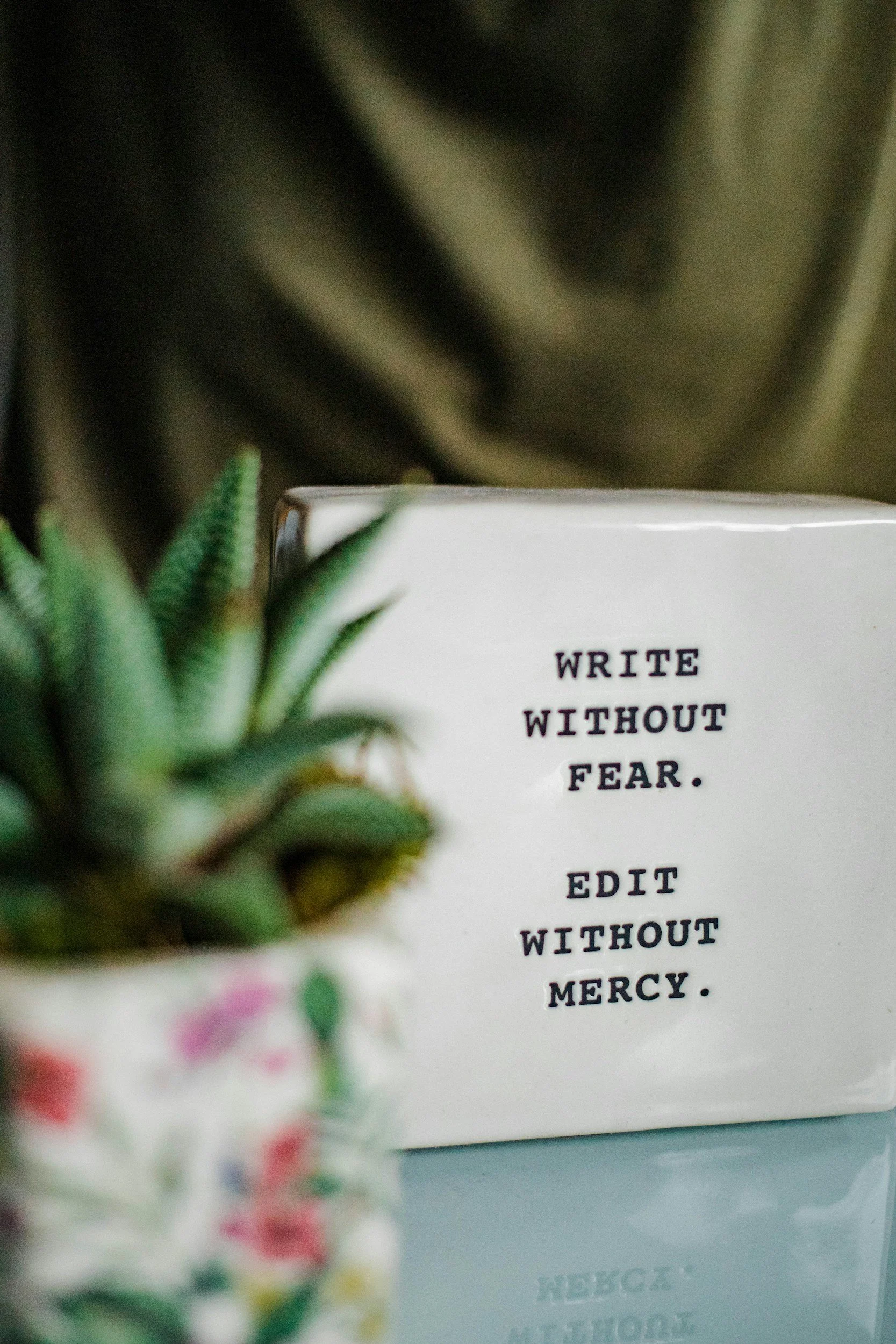
One of the things I was—and still am—interested in was getting involved in the preamble for indie authors. You know what I mean: developmental edits, beta reading, and even ARC reading, since I’m a pretty sharp critic at times.
However, when I started reaching out to indie writers, the first ARC book I picked up… was not what I expected. I won’t name the author or book because I don’t want to harm her launch, and I believe everyone deserves their shot, and just because I didn’t like it doesn’t mean others won’t.
That said, this book had so many glaring developmental issues that it was hard to believe this author had gotten any genuine feedback whatsoever before deciding to publish, which just makes me sad. I want every book to be excellent, not mediocre, but when the finished version is an overwritten, incoherent mess, it makes me want to dig out my developmental editing gloves and get right in there to gut the thing. Unfortunately, ARCs are way past the point of being able to take that feedback and put it to good use.
So today, I’m going to cover a few of the glaring developmental issues that one might commonly come across (in romantasy, but this is broadly applicable) and why they can make a book more or less unreadable.
Over-Writing AKA Purple Prose
If you’re like me, you’re dead tired of the traditional publishing industry pandering to the modern world. What I mean by that is the desire to dumb everything down to the 6th grade American literacy level (no offense intended, but it is what it is). No big words, writers, because people don’t know what they mean. Hey, trad publishers, are you aware that the reason I’m so verbose was because I looked up words I didn’t understand when I was reading books throughout my life? That’s quite literally how we learn and it’s easier than ever when you can have a dictionary on your phone. Why is the modern world so dedicated to keeping us stupid? (I have an answer to that, but it would be an entirely different article, so I digress…)
With all that said, I still firmly believe that writers should not be using every $5 word they know at every opportunity they get. Part of the issue with the book I did not finish was that the author was using all of the fanciest language imaginable, while not actually using it to say anything, let alone anything that helped set a tangible scene in my imagination.
For example:
When the two main love interests meet in the beginning, they’re at some sort of military outpost, but it’s not described in any significant way. It lacks sufficient visual exploration of the setting.
The female main character is brought into a room that is not described, where the person she’s being introduced to is completely engulfed under a blanket. Why is he engulfed completely? He’s not dead nor ill and most people don’t sleep fully under the covers with their heads hidden, so that’s weird. Also, why would he be sleeping when important people are visiting? I cannot recall if a sensible time of day was mentioned or not. So, right off the bat, the scene is not well set.
Then the blanket “cascades” off him, but doesn’t say whether it just revealed his head or his whole body. Since it is a romantasy, naturally there’s a lot of lush description of the love interest’s physicality, but that lushness gets spread around to discussing the “plush” mattress he’s on. I wouldn’t imagine a military outpost would have “plush” mattresses; rather, I’d expect them to be quite rudimentary, and in the case of this empire, in fact, I’d even more expect them to be pretty basic/uncomfortable. So up-front I’m feeling like the author didn’t actually research anything for this story.
Then, when the MMC does something that gives the FMC a bit of a panic, she starts describing how he smells. If you’ve ever been in a panic for any reason, I can assure you that attention to detail can be a legit reaction, but in this instance, it immediately didn’t feel right, because the FMC was getting very much into her head with anxiety and all she was describing in that moment was the MMC’s smell. It didn’t make the panic feel very real, which makes me think the author also didn’t do any research into human psychology or how panic attacks work.
Point being, the author seemed to hone in most of their energy on creating sensory invocation between the two romantic interests, but completely neglected to actually set any sort of a sensible scene for the reader. Then, through over-writing, they drew too much detail into illogical places, while not providing enough detail beyond “lust eyes” towards anything else going on. I believe another reviewer of this book said the author used the phrase “impossibly brown eyes” over thirty-five times in this long, long book.
There’s also a fine line between learning to word something poetically versus using every big word you can come up with. Just because you’re verbose, doesn’t mean you actually know how to use the words. There’s a delicate poetry to evocative phrasing, which involves toeing a fine line. If you’d like a great example of magnificent, romantic, beautiful prose, check out the Kingkiller Chronicle by Patrick Rothfuss (although, don’t, if you like series with endings or authors with accountability). Pat’s one of the grandmasters of beautiful phrasing. Or, perhaps go read some poetry or stories from the Romance-era writers, like Byron, Tennyson, Coleridge, or Blake. They are some of the forefathers of writing about the beauty of the world in prose.
The point being is that all words are not created equally. The reason we have words like “luminous” and “brilliant” alongside “bright” is that “bright” doesn’t always invoke the right senses when used. But not all of these words are a 1-to-1 switch. If you try to use “cascaded” every time you should use “fell,” you’re ending up with someone tripping and cascading to the floor, and that just doesn’t make sense, because a cascade is more leisurely, while a fall is sudden and often violent and risks pain. It’s okay to use your $1 words too. “Slid” is a perfectly viable alternative, and much more sensible to set a scene.
If you use all synonyms interchangeably, you’ve not learned the nuances of the language just yet. This is part of the skill set that can be developed, but also, it’s worth saying that writers like Joe Abercrombie are phenomenal at what they do without using romantic language whatsoever. I understand the pull for such flowery phrasing in romantasy, which is often all about invoking the senses with descriptive finery, but you need to learn when to dress things up and when to strip them back so they actually make sense to the reader. Less is more, unless you want to end up like Yngwie Malmsteen.
If you’re not familiar with good ol’ Yngwie, he has a legendary notoriety in the heavy metal scene for being horrendously wanky in his guitarwork. Talented, yes, absolutely, one of the best shredders out there, but utterly and extraordinarily tasteless. Most of his songs would benefit from significantly more restraint. Why? Because more often than not, the endless riffing makes it so the listener is overwhelmed and exhausted. Nobody needs proof that Yngwie can shred. We all know he’s one of the best. What listeners who aren’t 100% dedicated to riffage want, however, is some room to breathe and let the music sink in, and his music distinctly lacks that space in between.
It is the same with prose. If you fill a paragraph with wanky description, make sure that you’re actually describing the scene, not just one character’s horny lusting for another. Include that, yes, but set the scene first, so that the lusting becomes immersive, not confusing. Emotions need time to breathe, so don’t smother your story under too many words that aren’t serving the scene.
Pacing Problems
This is, in many senses, an offshoot of the over-writing part, but when a book is over-written and the author can’t seem to write “she crossed the room” without it reading like “she lifted a delicate foot from the floor and set it down one pace ahead, repeating this tender migration until her pristine toes inscrutably delivered her slight figure to her destination”… it’s just exhausting and unnecessary. Colorful language is fun, but not when it drags the story out endlessly.
Now, yes, this book did over-write a lot, but it also under-wrote to an equal degree. You see, the author was so focused on creating romantic tension between the two main love interests that she forgot to introduce the rest of the main cast, who should have each been given a proper introduction to their personalities and magic. Instead, they were more or less listed, and then all of their dialogue was worldbuilding exposition, and in no way really separated the side characters from one another. The characters kept saying things that they should clearly already know in order to hand-hold the reader through the world, rather than letting us experience it as it came.
I’m not saying that every romantasy should be bang-bang-bang fast-paced. Far from it, especially if you’re writing cozy romantasy. It’s just that I shouldn’t need to chew through over-spiced bad meat to get to the soft center. If you’re using twenty words when three would suffice, you’re going to wear out and exhaust your reader. This book was, again, nearly 1000 pages long, but I have the feeling that, if I had been its editor, I would have easily cut half of it.
Writing Novels Like Anime
This is where I’ll come in with an unpopular opinion, but it just so happens that a lot of people who love romantasy are also enthusiastic lovers of anime and Japanese art/storytelling/culture. And while there are always exceptions to every rule (Fullmetal Alchemist: Brotherhood being one of the best series I’ve ever seen, across any genre, and most Hayao Miyazaki films rank amongst my all-time favorites), Japanese storytelling (and specifically, anime storytelling, and more specifically, shonen anime and romance) often relies on tropes to carry the characterization.
The tropy-ness of Japanese storytelling is often part of its charm, as these shows make it clear who the character is and what makes them tick by invoking tropes to fill in the blanks. This leaves the viewer with more space to explore the what in the now when it comes to action/adventure/romance, but may also strip them of the ability to find depth in the character, leading a lot of anime characters to bleed together into “hopelessly optimistic male lead” (AKA dipshit, more often than not), or “strong female character” (usually offensive), or “broody moody hot emo guy that everyone loves despite having no personality”… okay I’m starting to rant, sorry.
This trope-laden tendency is exactly why I stopped liking anime after a while. Anime is fun and exciting and has cool action scenes and great character arcs, and a whole spectrum of artwork, but as often as not… it just doesn’t make sense and the characters are very flat/one dimensional.
My big issue with anime, and often romantasy, is the reliance on tropes in place of actual logic and character development. This book had the serious issue of using character dialogue for exposition. This can be a useful way to give the reader information, but it doesn’t work if the characters are saying things that they should already know just so the reader can also be in the know. Fewer things grind my gears more—regardless of media type—than when it’s flagrantly clear that the author wrote the scene because this needs to happen and this needs to be explained, so these characters will show up and do that to make sure the reader knows, all while acting like weird alien AI robots who don’t know how or why people behave like people. What this resulted in was a bunch of characters mansplaining things to one another that should have been long-established between them, based on their long-term military relationship. They also did not use any sort of military-grade formality or respect in their interpersonal relationships, which felt horribly inappropriate for the established setting.
Now, if you have a great tolerance to familiarity in the media you consume, this might not be a huge issue. But I have noticed that there’s a huge crossover in romantasy writers and anime lovers, and so I see a lot of romantsy writers using “anime logic” in their stories.
A big issue I find in anime is this tendency to have a character point out something illogical and then laugh it off immediately as not important, and that’s really not how people act IRL. Remember how, in the first Star Trek movie (A New Hope), C3PO and R2-D2 are launched towards Tatooine in an escape pod that gets noticed by the bad guys but they let it go because there are no life forms on the ship? Despite androids being a well-known feature of this world? For some readers, sure, these things aren’t important if the story is compelling enough, but for the logic-needers out there, it makes no sense. Sentient droids are commonplace in this world and there is an active war going on. Those security guys should have been diligently checking everything, but they didn’t because otherwise the story can’t happen. Thus is true of many anime characters (not just anime characters, but I find it more broadly common in anime than anywhere else), because they rely on tropes to carry the weight of characters’ logic, and in most cases, tropes alone cannot cover the nuance of individual character arcs or plot arcs.
This is especially important because writing requires description that anime does not, because they are different media types. Anime writing can get away with a lot more generic writing because the animation supplements the writing and can show more than it tells. If you only go into the depth that anime goes into with dialogue, etc., you might find your story lacking.
Dialogue needs to sound real, and if characters are constantly saying, “Why are you doing this? Haha, well, whatever, it doesn’t matter,” I’m not feeling like they’re a real person. I’ve never heard a real person talk the way your average anime character does. A lot of people seem to forget that anime is a whole thing of its own, and that what works for it doesn’t always work for other types of media. A novel that reads like an anime script is, 9/10 times, just no good.
And the worst thing you can do? Notice that you’ve written a plot hole and draw attention to it, but then dismiss it. This happened once to me in a writing project I had with a penpal when I was a teenager. The scene was between two characters, one of whom could have easily incinerated the other, and instead of my pal clocking that this should have happened by all logic, the character just went, “Shit, I hope he doesn’t burn me alive, because he sure could,” (or something to that effect). If you’re writing something where something should be explained by basic human logic but isn’t, that’s immediate proof that the scene has a plot hole and the writer was too lazy to fix it.
Please, please write characters whose actions and words make sense per their personality, and if you aren’t sure how to develop that, I’ll point you in the direction of Film Crit Hulk’s Screenwriting 101, and specifically to the Character Trees. If you look it up, you’ll find it online without needing to get the whole book.
Perspective
This is probably a personal thing, but I loathe first person perspective, regardless of whether it’s first person past or first person active. I just find inner monologues to be horribly tedious when fore-fronted, and I also find that only getting perspective from one character is uninteresting, hence why I never read Twilight.
However, I say that while reiterating that I am broadly not a fan of Harlequin romance or romantasy. But even though I really enjoyed the Hunger Games series, I admit that even in that series, I wished it had been written from an entirely different perspective. And when it came to 50 Shades of Grey (a book that makes it clear that the author didn’t do any research into BDSM, incidentally), hearing endlessly about Anastasia’s inner goddess was outright painful. It’s simply not for me—I like to get into the heads of many characters, not just one. The exception to this would be a reflective book that features only one character, but I can’t say I’ve come across anything like that as of now.
With that in mind though, I am a romantic at heart, so regardless of perspective choice, I will always give a book a chance to impress me. This ARC book, unfortunately, did not feel like it went through sufficient developmental edits, because the perspective was coming from the FMC but there were several moments where she had insight into other characters—namely, the MMC—that she simply should not have had. I want to make it clear, too, that there were moments that were designed clearly as an intuition or an emotional insight created by the way their magic connects to one another, and that’s all fine and dandy, but there were also moments where the FMC simply knew why a person was acting the way they were and there was no justification for why she would know that. Therein lies the line that must not be crossed. The perspective character shouldn’t always know what other people’s motives are just because they’re the main character.
Furthermore, this book opened with a first person perspective prologue from the villain—an Emperor whose entire inner monologue was fear, power, and rage. This was extremely generic villain 101 stuff, and you know what? It’s okay to have a really generic power-hungry emperor, if that’s who you want your villain to be, but giving your reader full-spectrum insight into the inner workings of the villain’s mind as the first thing you read in the book pretty much undercuts any possible tension created by the villain’s motives. If I’m aware from page one that the villain is a stereotypical evil, mustache-twirling man who subjugates his people to fulfill his own greedy self-serving desires… I’m not expecting any surprises there, nor do I think I would have gotten any. For a very long book, to feel no tension towards the villain makes me wonder why this romantasy story even needed a villain at all, but reading was tedious enough that I couldn’t continue on to find out.
Does Your Book Have a Plot?
This one’s specifically written for the romantasy crowd, but it’s important for all writers:
What is the plot of your book?
In this ARC, the author seemed to have two things in mind: epic fantasy novel and endless yearning romantasy. I’ll never tell you that you can’t write both of these in one book—you absolutely can! It’s just that this novel was nearly 1000 pages and the actual plot of the book regarding an evil emperor and the way he controlled people and the basic way his personal protection was organized (say, having all the strongest magic users guarding his strongest mage, rather than… himself) wasn’t really there and didn’t go anywhere.
This resulted in a book that was about nearly 1000 pages of endless yearning that wasn’t even earned because the characters had direct insights into one another’s minds via the magic system. They even took the time to write down their feelings about one another, or so I read in another review. Most of that happens pretty quickly, so the rest of the book is hundreds of pages of yearning for no reason,
There’s a good question to ask yourself when writing a plot which is, “why did the character do this and not literally anything else?” Don’t get me wrong, the potential of the “anything else” is vast and may lead to plot holes (this is why developmental editing and/or quality beta reads are really important), but that’s why we research. If you’re writing about power structures, look into how empires actually were formed and upheld. Don’t just write “muahaha I’m so evil, I want power and to keep it.” Most bad guys are like that. I want to know why. What’s the villain’s motive?
In my own writing, I try to make it so that every sentence should be pushing something forward. An emotion, a plot point, a conversation… each and every word and phrase must be serving the story and if it’s not, it gets cut.
I heard the phrase “idiot plot” recently over at Cinema Therapy (one of my current favorite YouTube channels) and it basically means “things happen so the plot can happen” and those things don’t usually make sense, ergo the characters all act like braindead idiots. I believe the film they referenced was The Kissing Booth (or one of its sequels), wherein most of the main character’s actions and reactions are illogical when held up against how she was established as a character.
This book, sadly, had an idiot plot. Things just happened because the author wanted them to happen. There was no narrative through-line from established character traits to portrayed actions. For example, the male lead and romantic interest constantly preaches about the female lead and romantic interest’s consent and autonomy, yet doesn’t treat her much better than the people he’s pushing back against.
There’s the whole gardener versus architect aspect to writing, and I will always sing the praises of both of them. But even if you are a full-fledged pantser, once you’ve finished your first draft, you need to examine your story with a critical eye and think, does any of this actually make any sense? I won’t lie, this romantasy author felt like they went ahead and published the first draft with no feedback (or editing?) whatsoever. I simply can’t call something like that good writing.
Conclusion
Ultimately, it is hard to look at an ARC book when you have the skills for developmental edits, and eliminate that part of your brain that says, “wait, but this doesn’t make sense…” in favor of being a hype guy.
And, in all fairness, the average Harlequin/romantasy reader might not care as much about about narrative cohesion, consistency, or logic quite so much as they might care about whether two characters will eventually kiss. And that’s perfectly alright. I’m not here to judge anyone for the type of books they like or don’t like. But I will be a stickler about what consists as “good” writing, and to receive that grade, at least from me, the story must have internal logic and narrative cohesion, which is hard to accomplish if you’re only focusing on romance and lusty dialogue.
My piece of advice to all new writers? If you’ve never rewritten a scene, made a significant plot change, or fleshed out/cut back significant parts of your novel, it is not ready for release. Especially if this is your first book. I’m astounded by how many new writers out there push out their first draft for queries or to self-publish before they even learn how to write well. Having an idea is one thing, but executing it to your vision with matching quality is a whole secondary skill. Don’t do your story a disservice by not giving it the love it needs. Editors and beta readers exist for a reason, and some of us are willing to work within financial constraints because we love literature so much (beta readers are often free, incidentally).
In short, love your story as much as possible and give it the work it needs to be the best it can be!
Looking for an editor? Consider giving Bear a chance to nitpick your book into being the best it can be!
Or, for more writing tips and to stay up-to-date on Bear’s own fantasy projects…
